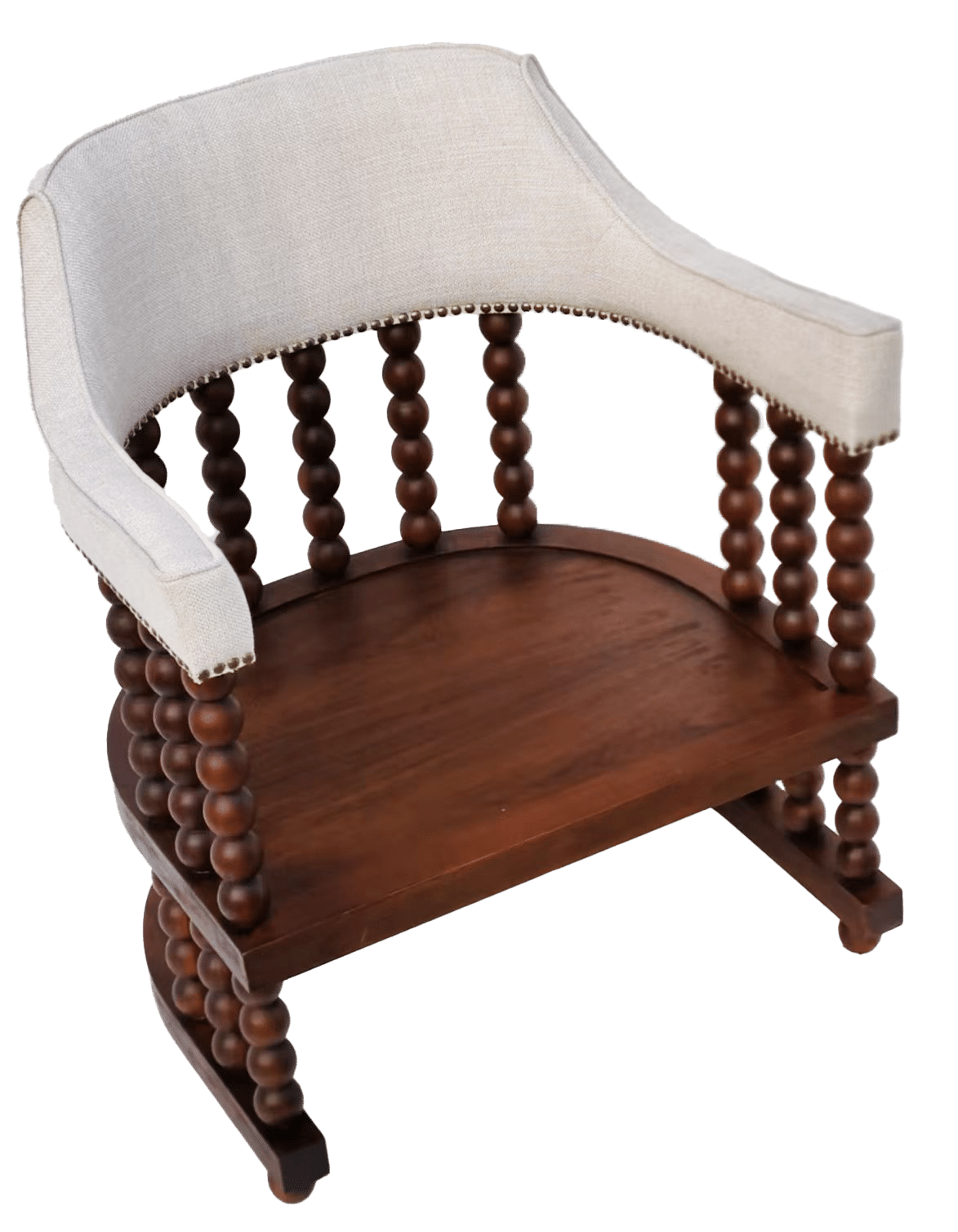
Choosing the right OEM furniture manufacturer can make or break your project timeline. For hotel developers and procurement teams, it’s not just about price — it’s about consistency, brand standards, and on-time delivery.
In this guide, we’ll unpack how to identify reliable OEM furniture partners, what to check during production, and how experienced factories like Betherev streamline OEM manufacturing from design to installation.
What Is an OEM Furniture Manufacturer?
When people talk about OEM furniture manufacturers, they often confuse them with ODM or trading companies — but each plays a very different role.
OEM stands for Original Equipment Manufacturer. That means the factory produces furniture based on the client’s design, specifications, and brand requirements. In other words, the client owns the idea; the factory brings it to life at scale.
By contrast, ODM (Original Design Manufacturer) companies create their own designs and sell them under a client’s label. It’s convenient for smaller buyers but limits customization. Trading companies don’t have factories; they outsource production, which can lead to less control, slower feedback, and higher costs.
The OEM furniture manufacturing process usually includes:
The client provides drawings, mood boards, or concept images.
The manufacturer engineers them into production-ready shop drawings.
Samples and mock-ups are made for approval.
Mass production begins with detailed QC reports and progress photos.
Goods are packed, shipped, and installed following brand standards.
For hotels, serviced apartments, and commercial real-estate projects, this model offers full control over design, finish, and quality — while maintaining cost efficiency.
Key Benefits of Working with an OEM Furniture Manufacturer
Brand Control — Each item matches your project’s design intent and brand guidelines.
Lower Cost per Unit — Bulk production through one factory cuts out middlemen.
Guaranteed Consistency — The same materials and finishes across all rooms ensure a unified guest experience.
For any developer or procurement manager, partnering with an experienced OEM furniture manufacturer means reliability, scalability, and design integrity from concept to completion.
Why Developers and Hotels Choose OEM Furniture Manufacturing
When you manage a large hotel or apartment project, every decision matters. That’s where OEM furniture manufacturing stands out.
Instead of juggling multiple suppliers, developers work directly with oneOEM furniture supplier that produces high-volume, custom furniture efficiently. This direct link reduces cost per unit and ensures consistent quality.
Another big advantage is customization. Hotel brands like Marriott, Hilton, and Accor follow strict brand standards — down to fabric texture, veneer tone, and metal finish. A professional OEM furniture manufacturer can tailor every element to meet those standards while maintaining compliance with audit requirements.
A one-stop OEM furniture manufacturer also integrates joinery, lighting, and upholstery under one roof. That means fewer emails, faster sample approval, and smoother logistics. When all categories are managed by the same factory, design and delivery stay aligned.
The result? On-time delivery, consistent finishes, and a hotel project that opens exactly as planned.
How to Evaluate an OEM Furniture Manufacturer
Choosing the right OEM furniture manufacturer is critical. The partner you select affects quality, delivery, and long-term reliability. Here’s how to separate real manufacturers from intermediaries before signing any contract.
Factory vs Trading Company: Key Differences
A true OEM factory owns its production lines — wood, metal, upholstery, finishing, and packaging — while trading companies outsource. Factories control cost, timeline, and consistency; traders depend on subcontractors.
Red flags to watch for:
No verifiable factory photos or videos.
Office address doesn’t match the factory license.
Hesitation to disclose production capacity or lead times.
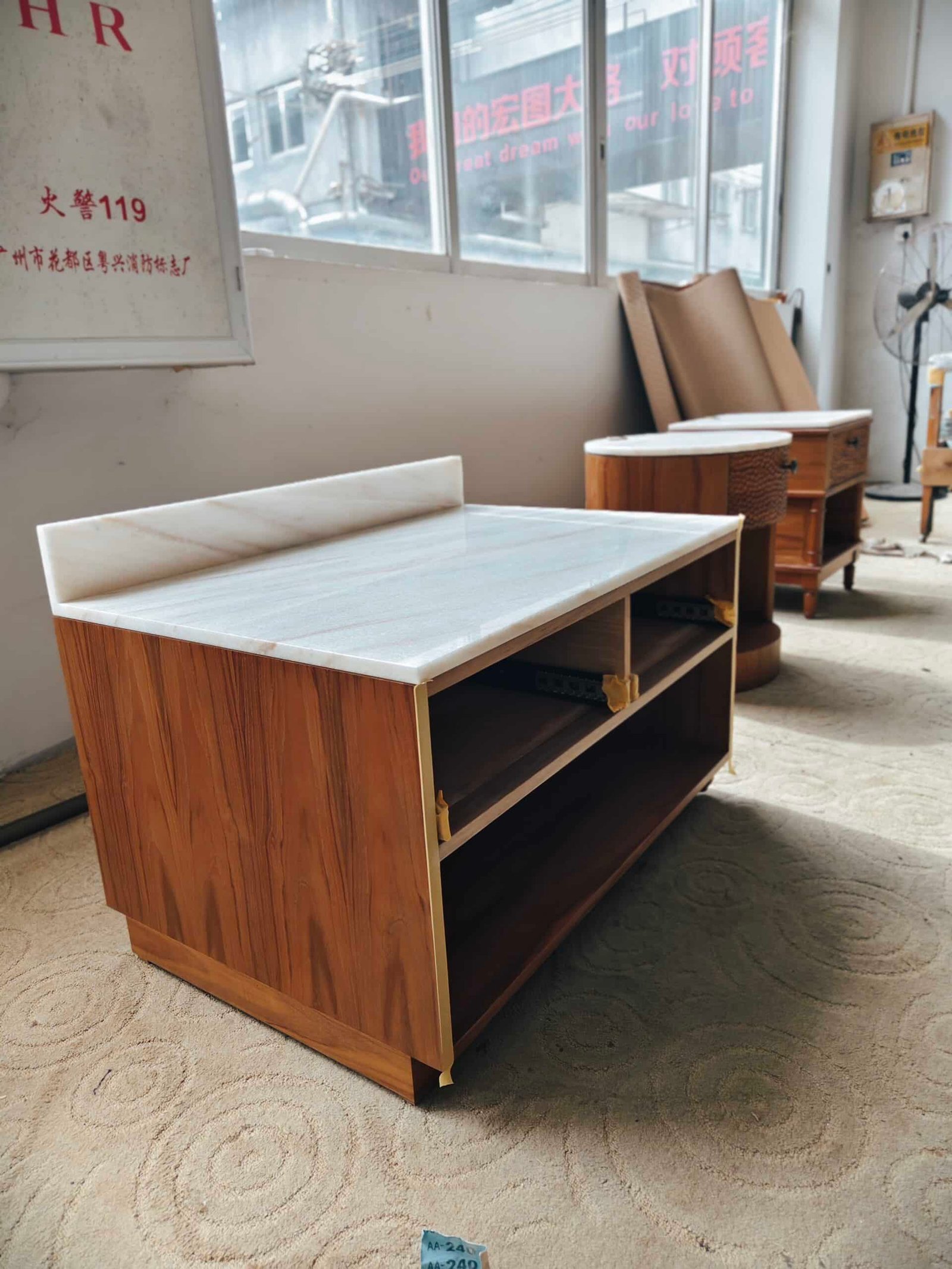
Always request a live video tour or virtual walkthrough to verify real production.
Checklist: Production Scale, Certificates, and Compliance
Professional OEM furniture manufacturers proudly share their credentials. Look for:
Ask for case studies from past hotel projects (Hilton, Marriott, Accor). Review mock-up results, approval timelines, and logistics solutions. A proven OEM furniture manufacturer will share these openly to build trust.
OEM Furniture Production Workflow Explained
Working with an OEM furniture manufacturer follows a transparent, step-by-step system:
Technical Drawings & Design Confirmation The client submits drawings; the OEM team clarifies every technical detail before production.
Sample Development and Approval The factory builds prototypes for inspection — only after approval does mass production start.
Mass Production and QC (30 / 60 / 90 %) Each milestone includes inspection reports and photos.
Packing, Labeling, and Export Documentation Every item is moisture-proof packed, labeled, and documented with CIQ, HS codes, and certificates.
Example Timeline for a 100-Room Hotel (16–20 Weeks)
Week 1-2 : Drawings & Samples
Week 3-6 : Approval & Procurement
Week 7-14 : Mass Production + QC
Week 15-16 : Final Inspection + Docs
Week 17-20 : Shipping & Installation
Common Challenges in OEM Furniture Projects
Even with the best planning, hotel projects face risks. Typical issues include:
Miscommunication between designer and factory → Solved by assigning bilingual project engineers who bridge design and manufacturing.
Poor Sample Consistency → Prevented through locked samples, finish formulas, and multi-stage QC.
Late Shipment → Avoided via early container booking, in-house logistics, and experienced forwarders.
Modern OEM furniture manufacturers use digital project-tracking systems for real-time updates, QC photos, and milestone transparency — so you always know where your project stands.
Partnering with a Trusted OEM Furniture Factory Like Betherev
When managing a hotel or apartment project, coordination matters. That’s why partnering with a one-stop OEM furniture manufacturer like Betherev simplifies everything.
Our factory integrates joinery, metalwork, upholstery, and lighting under one roof. With over 30 years of experience and 1,500 + global projects, Betherev understands hotel brand requirements, documentation, and approval processes.
We’re ISO-certified, use E0-grade eco-friendly materials, and follow international standards like BIFMA and CRIB 5. From drawings to delivery, our project team ensures transparent updates at every stage — 30 / 60 / 90 % QC, detailed export packaging, and complete shipping documents.
For developers, this means:
Fewer suppliers to manage
Consistent finishes across all spaces
Smooth customs clearance and on-time installation
Betherev isn’t just a vendor — we’re your dedicated OEM furniture manufacturing partner committed to perfect handover.
Conclusion
The right OEM furniture manufacturer should act as an extension of your design and procurement team. Work with certified professionals who guarantee predictable quality, faster approvals, and lower lifecycle costs.